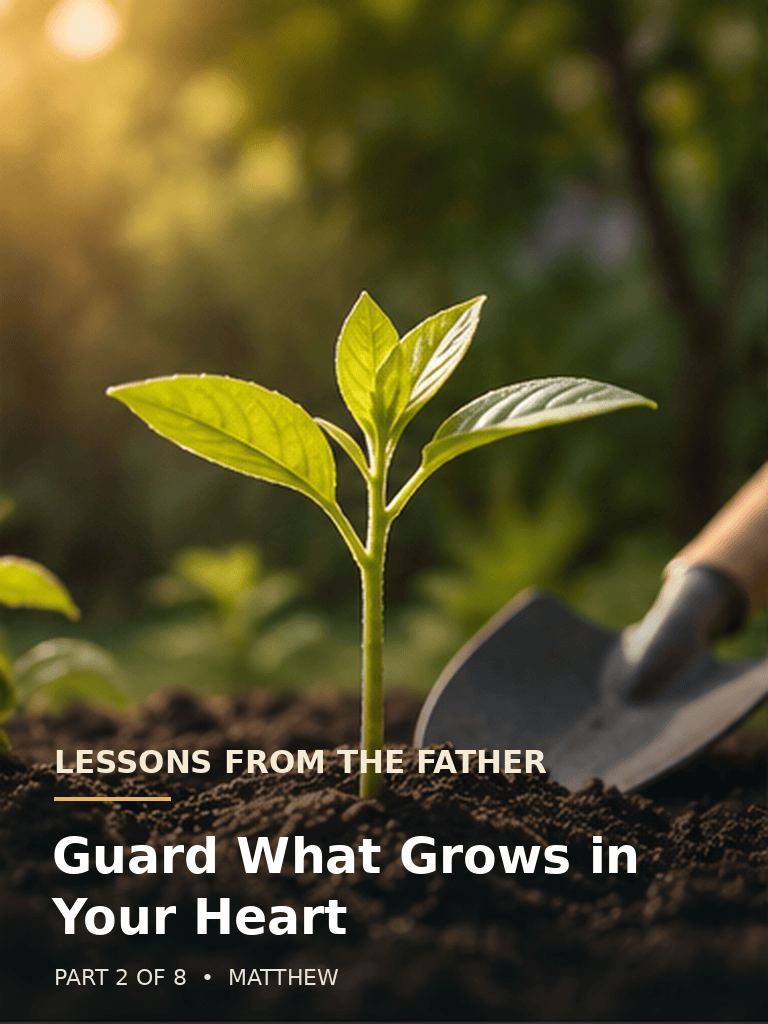
Lessons from the Father | Part 2 of 8
About this series
The Gospel of Matthew is filled with timeless wisdom about how we should live, love, lead, and grow in our faith. In this eight-part Dadvotional series, we’ll explore the teachings of Jesus through the lens of fatherly advice, uncovering practical lessons that challenge us to become better men, stronger fathers, and more faithful followers of Christ. These aren’t just lessons worth learning; they’re truths worth living and passing down to the next generation.
Scripture: Matthew 5:21–30
Have you ever had a conversation with someone that ended hours ago, but you’re still having the argument in your head? Maybe someone at work made a decision you thought was ridiculous, or a friend said something that rubbed you the wrong way. You replay the conversation, think about what you should have said, and sometimes imagine how satisfying it would be to put that person in their place.
I’ve been guilty of this more times than I’d care to admit. The other person has probably moved on with their day, but I’m still carrying around a conversation that isn’t even happening anymore. And if I’m being truthful, sometimes my thoughts about that person aren’t exactly charitable.
We tend to excuse those moments because we haven’t actually done anything wrong. We didn’t lose our temper or say something hurtful. We kept it to ourselves. But Jesus challenges that thinking in the Sermon on the Mount.
In Matthew 5, Jesus begins with the commandment against murder, something most of us would confidently say we’ve never committed. Then He takes the conversation somewhere unexpected:
“But I say to you that everyone who is angry with his brother will be liable to judgment…”
Matthew 5:22
Jesus isn’t saying that every moment of frustration is equivalent to murder or that all anger is sinful. He’s exposing something deeper. The same heart that can harbor hatred, resentment, and contempt needs God’s attention, even when those feelings never become physical actions. It’s easy to measure our goodness by the terrible things we haven’t done, but Jesus is concerned with what’s happening inside us long before anyone sees it.
A few verses later, He makes a similar point about adultery, teaching that looking at someone with lustful intent is already a matter of the heart. His message is consistent: righteousness isn’t simply about avoiding certain behaviors. It’s also about examining the desires and attitudes we allow to take root.
I think about how easily frustration can become contempt, especially in the workplace. Someone makes a mistake, and rather than recognizing a poor decision, I start making judgments about the person. Before long, I’ve moved from disagreeing with what they did to looking down on who they are. That’s not a heart posture I should be comfortable with.
Our hearts are a lot like gardens. We can carefully plant and nurture good things, but neglect the garden for a little while, and the weeds will gladly take over. Bitterness, jealousy, lust, and pride rarely announce themselves as something dangerous. They usually start small, with a passing thought or an irritation we choose to entertain. Given enough attention, those things begin shaping our character.
As fathers, we need to recognize that our children may not know every thought crossing our minds, but they’ll eventually see the fruit of what we’ve allowed to grow there. They hear how we talk about people who frustrate us, notice how we treat their mother, and watch how we respond when things don’t go our way. If I preach respect but nurture contempt, am I really living what I’m teaching?
Later in this passage, Jesus uses dramatic imagery about removing an eye or hand that causes sin. He’s not instructing us to physically harm ourselves. He’s emphasizing how seriously we should take the things that lead us away from God. If certain conversations encourage gossip, change the conversation. If something you’re watching encourages lust, stop giving it your attention. If resentment is consuming your thoughts, bring it before God and pursue reconciliation when appropriate.
We don’t have to entertain every thought that enters our minds, and we certainly don’t have to give every thought a permanent place to live.
The good news is that genuine transformation isn’t something we accomplish through willpower alone. We need God’s grace and the work of the Holy Spirit to change the attitudes and desires we’ve allowed to take root. That work is ongoing, and I know it is for me.
Perhaps the question isn’t simply whether we’ve avoided doing something wrong. It’s whether we’re allowing God to cultivate something right within us. Because the condition of our hearts influences how we love, lead, and live, and that’s a lesson worth passing down.
A Father’s Challenge
This week, pay attention to the thoughts you allow to linger. Is there someone you’ve been quietly resenting, a temptation you’ve been entertaining, or an attitude you’ve been excusing? Bring that struggle honestly before God and ask Him to help you replace it with something that honors Him.
Prayer
Heavenly Father, You know my heart better than I know it myself. Forgive me for allowing anger, pride, resentment, or temptation to take root. Help me recognize the things that draw me away from You and give me the strength to turn from them. Create in me a heart that reflects Your love and grace, and let my family see genuine transformation in the way I live. In Jesus’ name, Amen.

